

Legislative Priorities

The Utah League of Cities and Towns believes that a government closest to the people governs best. That is why the values of local authority and community autonomy inform nearly all of the organization’s policy positions. Local governments are less insulated from their voters, making them more democratic and respondent to the will of their citizens. They understand the needs of their respective communities better than anyone and can directly provide for them. The primary goal of The League is to protect community autonomy and preserve their ability to self-govern.

ULCT has three primary pillars that are the foundation of our legislative advocacy: respect, collaboration, outcomes.  The Utah State constitution and state law both outline the role of cities and towns.  Simply put, we exist to provide for the health, safety, and welfare of our residents.  The traditional term of “local control” is an acknowledgement that government closest to the people governs best and cities work best when they can exercise their legal authority to meet those constitutional and statutory responsibilities.  We urge the State of Utah, the federal government, and county governments to respect the role of cities in providing services and infrastructure for our residents.  We seek to collaborate with other levels of government, the private sector, and our collective constituents to ensure Utah’s unparalleled quality of live. 

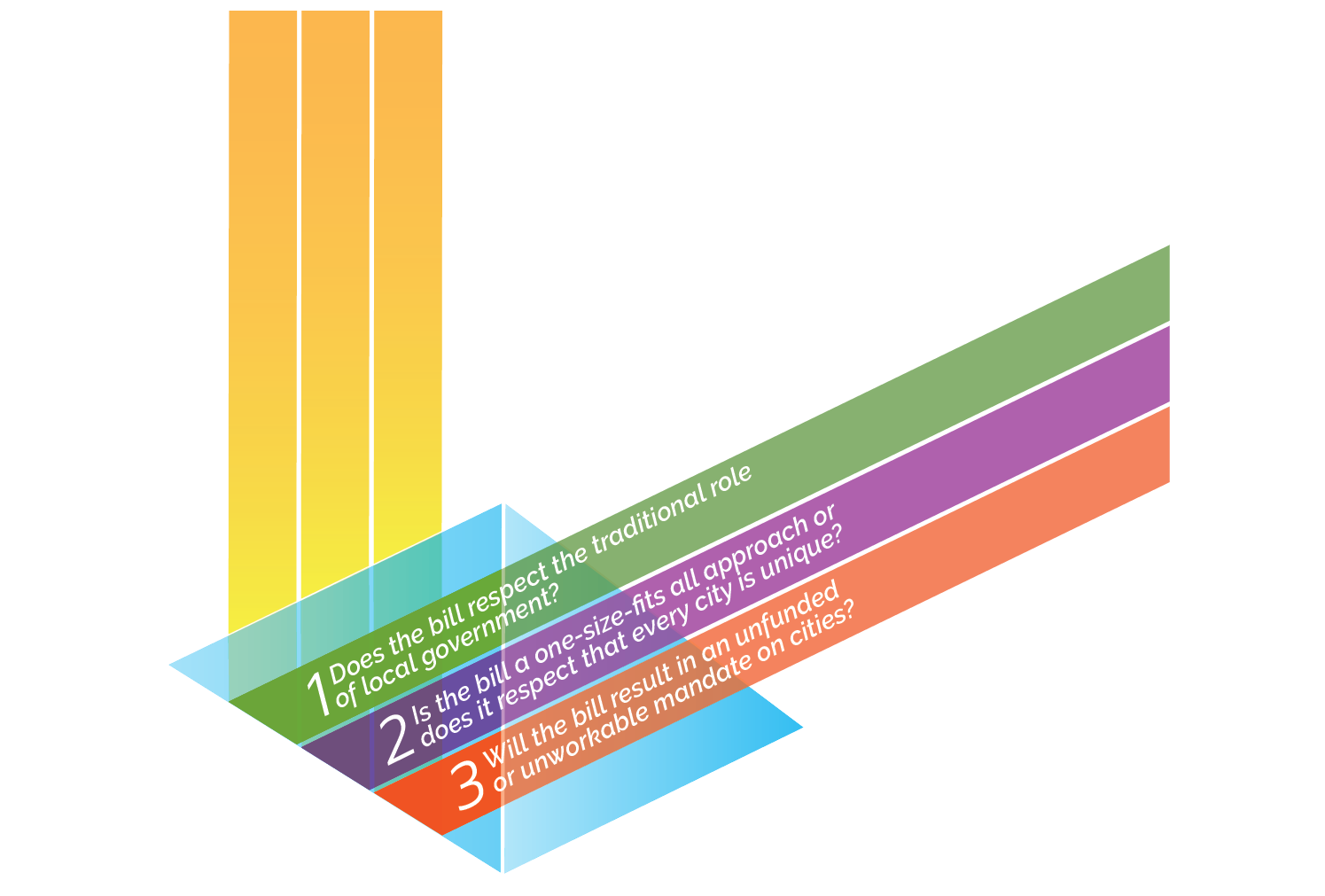
The League’s specific policy positions guided by the ULCT Policy Prism (pictured above) and are informed by resolutions (passed by a majority of the membership) and determined by the Legislative Policy Committee (LPC). You can find a list of all resolutions here. Below, are several positions on key policy issues.

Land Use

Local governments are responsible for planning and zoning to ensure the quality of life of today’s and tomorrow’s residents.

Infrastructure

Local governments are responsible for road, water, sewer, sidewalks, parks, street lights, and other public works and need the tools to manage that infrastructure.

Revenue

Local governments rely on property, sales, and gas taxes and fees in order to provide the services and infrastructure that residents expect.

Housing

ULCT is focused on policies that will promote affordable home ownership, infrastructure that is financially sustainable, and quaility of life.

Public Safety

The top priority for local governments is public safety. Cities and towns respond to the majority of 911 call for fire, police, and EMS services.

General Government

ULCT engages on legislation that impacts the ability of cities and towns to govern.
Stay Updated

Sign up for our newsletter to receive updates about the LAA program, upcoming events, and important announcements.

Close Search Window

Conflict Competence 101

Join us Friday after Annual for a full-day training on the basic concepts and skills of conflict competence, and provide participants opportunities to work together to apply these concepts to real-world challenges.